
An ominous date and morning sky
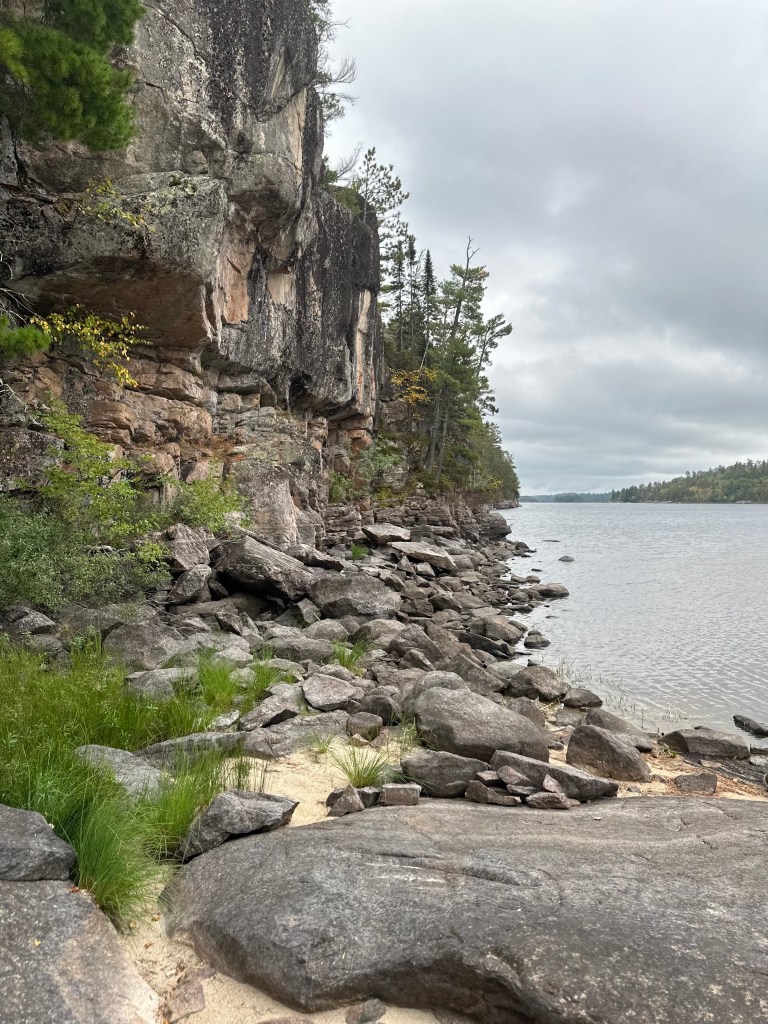
I rise at 7:10 to an early morning without a visible sun and check the camp to make sure things are secure. At tentside I capture a bit more heat from Terry. A glance eastward, surprises me with a ribbon of pink below a cloud. As I ready my phone to take a photo, the pink is gone. The last evidence of sun for this day. In early afternoon we decide to cross the open choppy water. The breeze turns stiff as we brave the headwind. We make it to the high cliffs in Canada. We paddle slowly, hugging the cliff in the lee of the wind. We are looking for pictographs on these walls. Terry spots the first one and I the other two.
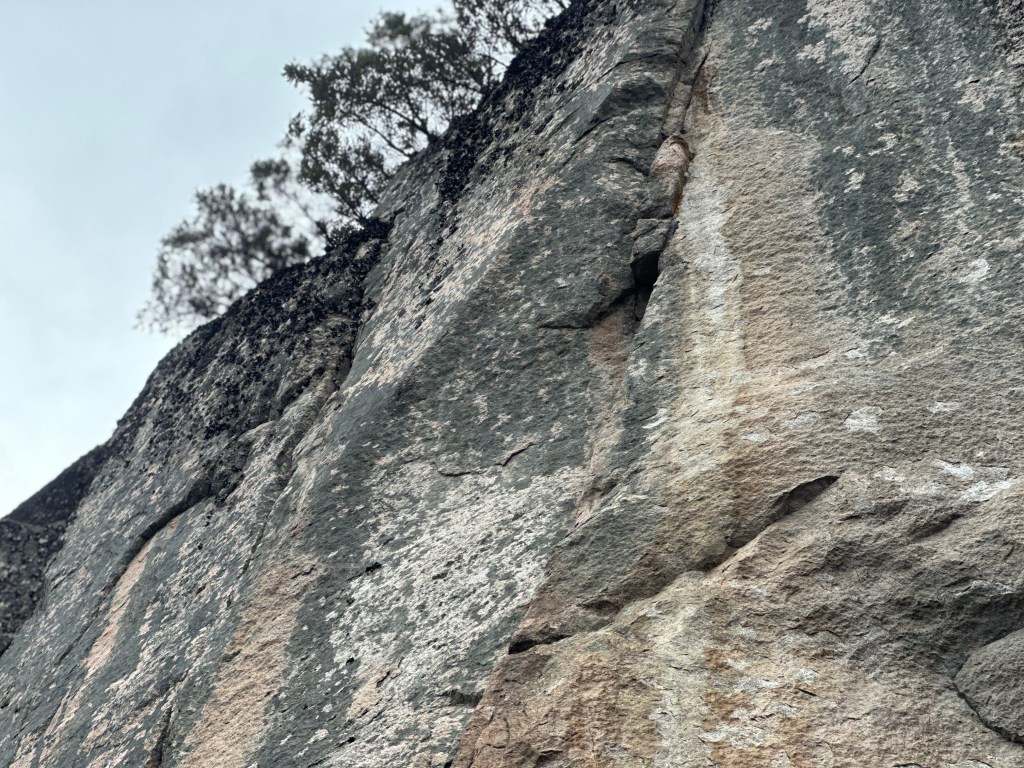
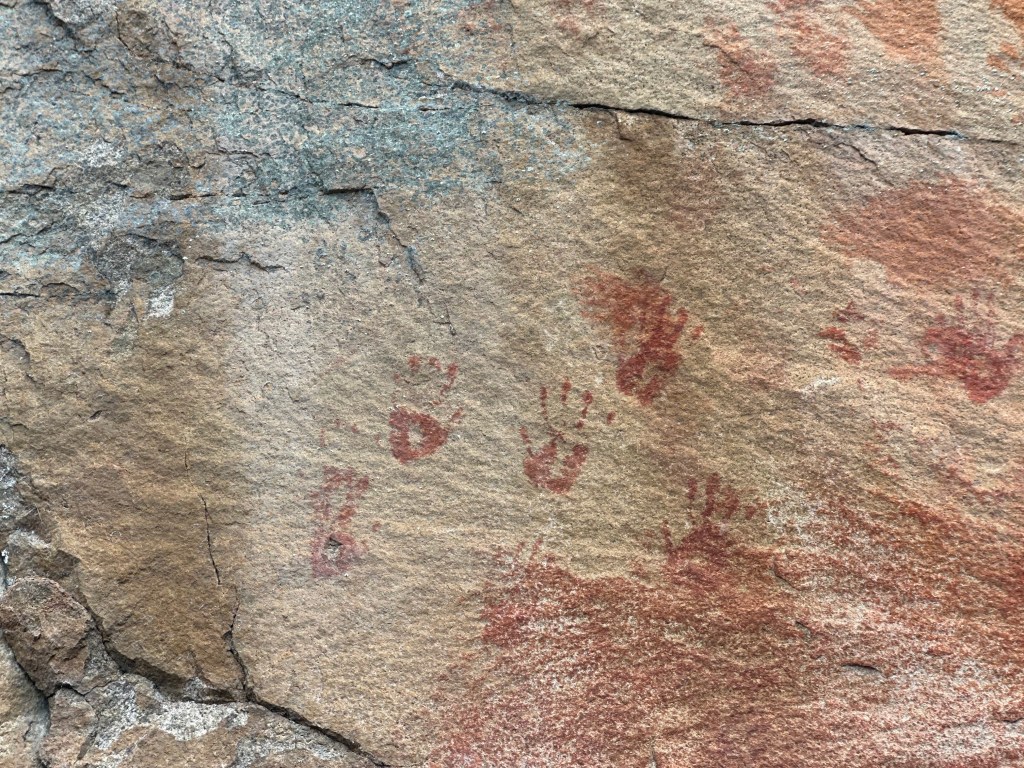
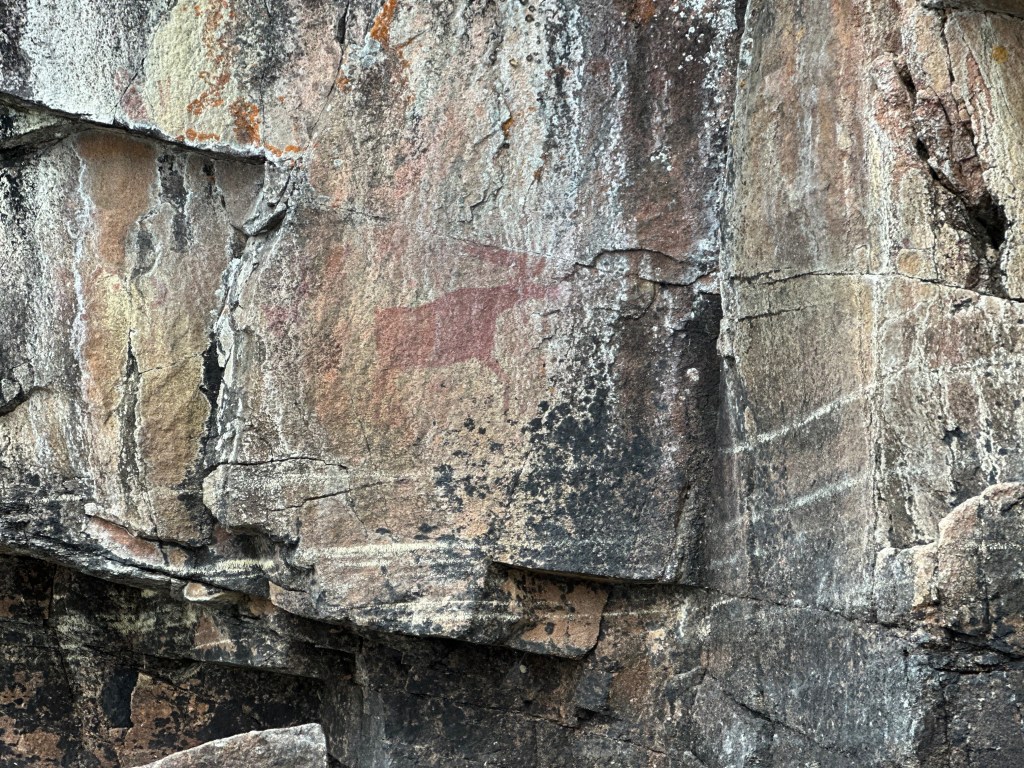


Our friend Diana provided us with this information (from someone-else’s blog) answering a number of our questions about the pictographs.
With the majority of painting done at the water level and the Ojibwe being skilled canoe makers, it makes sense that painters were likely in canoes when creating the pictographs. That makes sense for most of what we saw. But, it doesn’t satisfy all the imagery we encountered. A few paintings were high above the waterline in areas that seemed impossible to climb. While one could logically come to the conclusion that climbing, some sort of scaffolding, or rappelling was involved in making the pictographs, the truth is that no one really knows. Whether the paintings were made a couple or several hundred years ago, it’s incredible how well preserved they are. Considering the relentless conditions they are under—sun, waves, rain, wind, snow, water freezing to ice and later thawing—it’s impressive they’ve survived centuries. The paint the Ojibwe used is the key. The exact ingredients aren’t known, but enough is known to explain the paint’s durability. The paint was a mixture of red ochre and a binder of sturgeon oil, bear fat, or both. The result was a paint that has bonded with the rock face it was painted upon at a molecular level that draws modern backpackers, campers and other visitors from around the world.
We were thankful we braved the waters which turned out to be fun not dangerous. The adage “you can’t be too careful” doesn’t fit me at all.
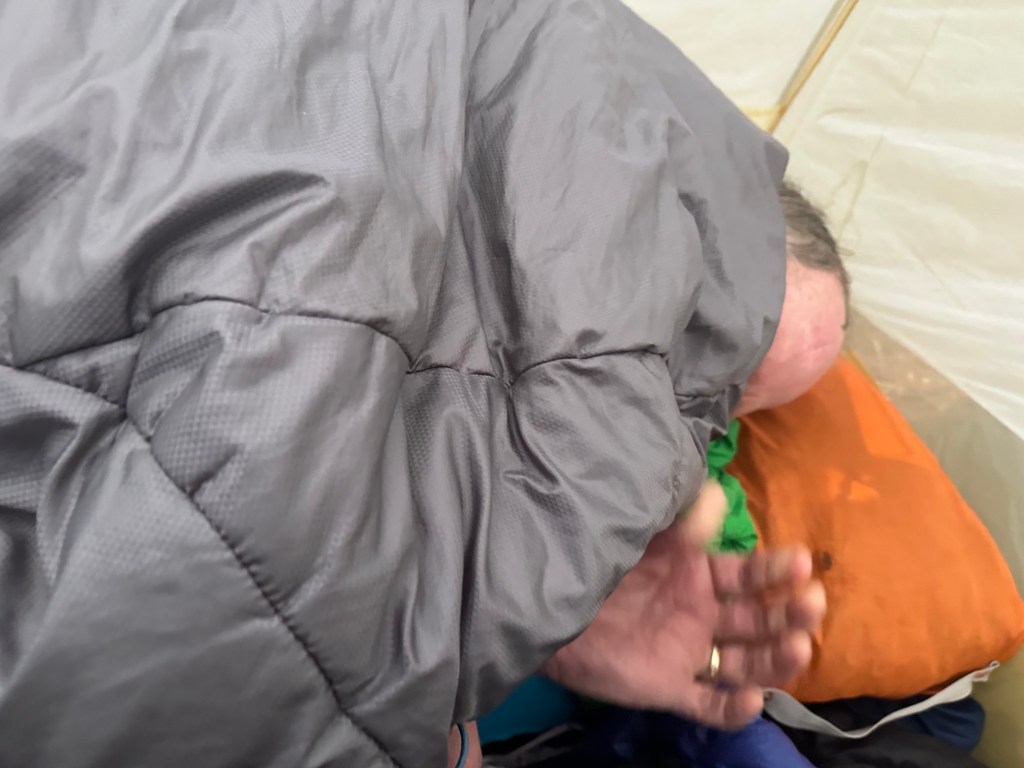
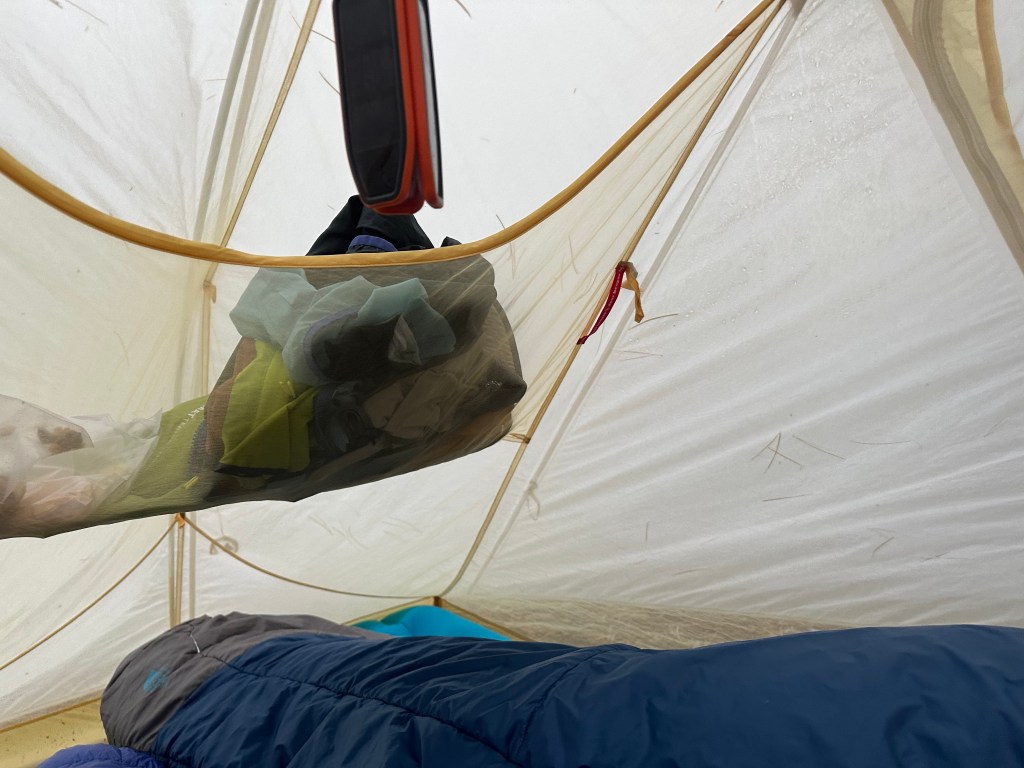
We reached our campsite as the wind and rain drove us into action. We felt quarantined and incarcerated in our less that small closet-space for at least 15 hours. Terry said that he enjoyed the howling wind and driving rain. And he was proud of our little tent.
 Mountain Peace